Understand La Muse by Constantin Brancusi with Universæ Analysis
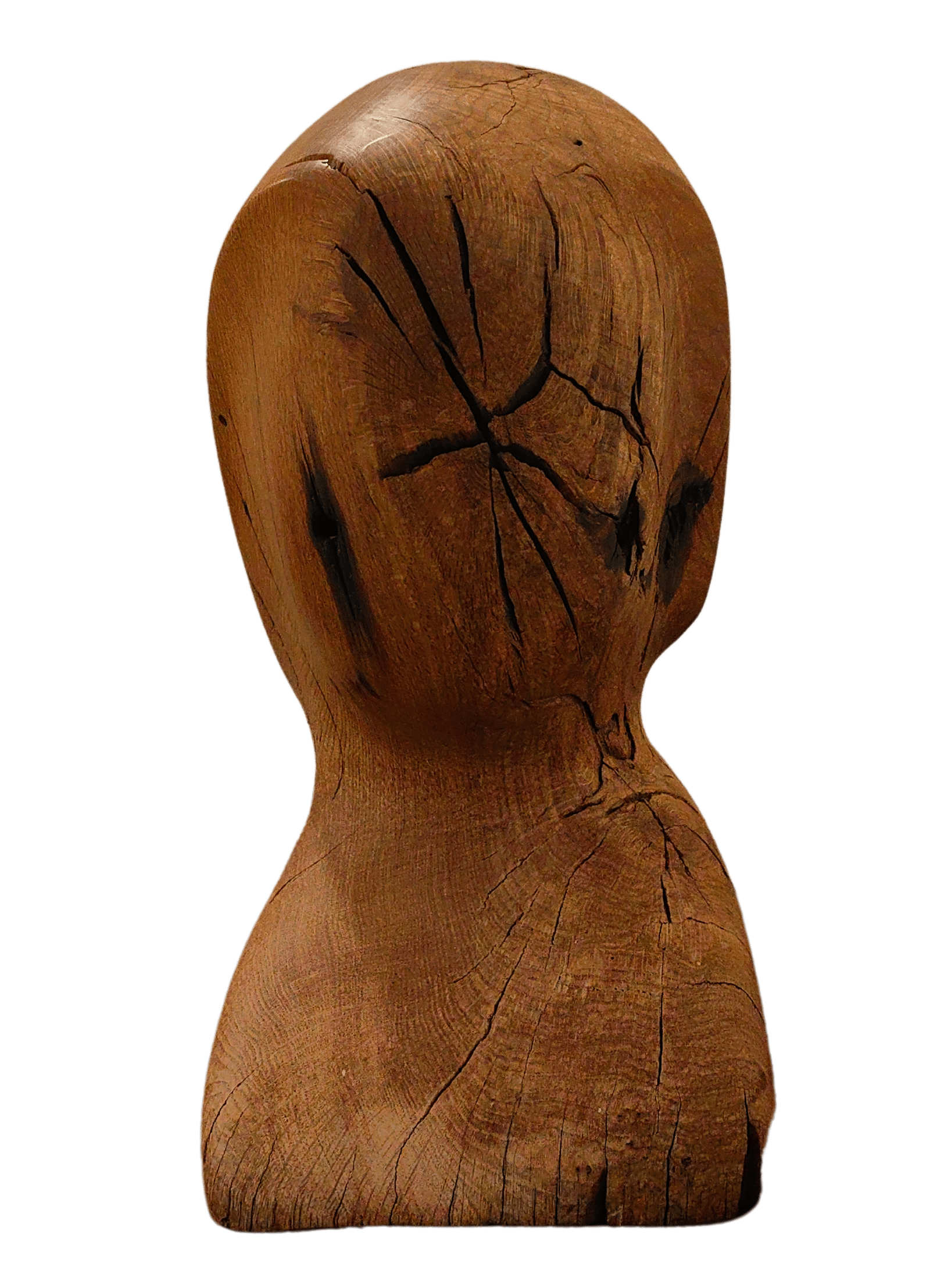
Brancusi’s Muse embodies a universal symbolic figure: that of origin, memory, and silence. With its ovoid shape evoking the cosmic egg and its lack of a face, it renounces all individuality to represent humanity in its most fundamental dimension more effectively.
The natural cracks in the wood, far from being flaws, become lines of force, representing a cross or an internal explosion, symbolizing the tension between matter and spirit. The widened and rounded base, close to an inverted triangle, refers to the female matrix, the archetype of fertility.
The whole expresses a language of primordial forms, linking archaic traditions (Egypt, the Cyclades, Africa) with modern research into formal reduction. This work, sculpted from a living material, acts as a totem of universal memory, linking the fragility of wood with the timelessness of the spirit.

Viewed in profile, the sculpture reveals the curve of an inner arc, a continuous line uniting the upper cap to the base in a controlled downward movement. This inflection is not an accidental gesture: it manifests self-awareness in its purest form.
The volume bends not under weight, but in an act of silent transmission, as if the material itself remembered its origin. The sculpture, thus turned inward, does not call out to the eye, but gathers the invisible. The natural vertical lines of the wood inscribe the coordinates of a sacred time into the flesh of the material, that of slow growth, of plant memory, of the cosmology inscribed in the fibers.
With its effaced profile, the face withdraws to allow the universal to emerge: it is no longer an individual, but a principle. This archetypal form embodies cosmic femininity in its posture of wisdom, not the woman as seen, but the mother of the world as conceived in ancient Egypt, the Feminine as the axis of transmission.
In this economy of means, in this inward-looking silence, we can read an ancient science: that of a world that knew the power of pure forms and the eternity of symbols.
Address
91, rue du Faubourg Saint-Honoré
75008 Paris, FRANCE
+ 33 (0) 6 51 60 18 07
CONTACTABLE Hours
Monday – Friday: 9am – 7pm
Weekends: 9am – 6pm